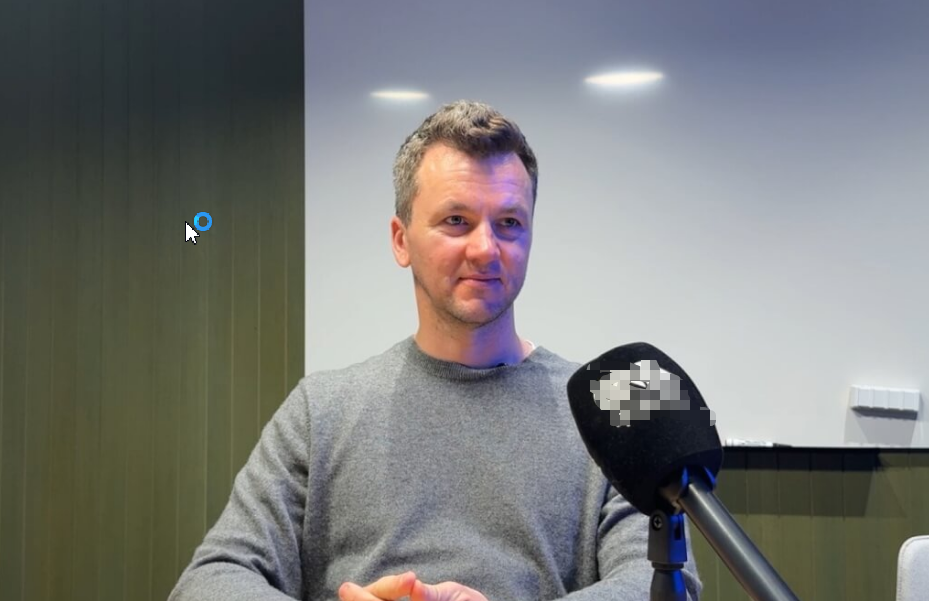
As AI tools become widespread, the barrier to entry for cyberattacks has dropped significantly. In a recent interview with the Central News Agency (CNA), Marijus Briedis—CTO of the Lithuanian cybersecurity unicorn NordVPN—noted that while the fundamental nature of cyber threats has not changed in recent years, AI has made it easier to generate and disseminate scams and phishing attacks, thereby posing a greater risk to average users.
AI Lowers Barrier to Attacks; Scam Tactics Spread Rapidly
Marijus Briedis notes that the cybersecurity threat landscape has shifted significantly over the past three to five years alongside the rapid development of Large Language Models (LLMs). “It has become incredibly easy to generate phishing links, scam websites, or fake online shopping platforms,” yet most users lack the ability to identify these threats and do not possess the necessary tools to counter them.
He points out that while AI has not altered the fundamental nature of these threats, it has made attacks easier for a wider range of actors to execute and expanded their reach, resulting in a rapid surge in such attacks. To improve public awareness of cybersecurity issues, NordVPN recently appointed former NBA star Shaquille O’Neal as its global ambassador, leveraging his influence to promote cybersecurity concepts in a more accessible way.
The Key to Cybersecurity Risk is the Human Factor: “Think Before You Act”
Regarding cybersecurity risks in the AI era, Bridys believes the issue should be understood from two perspectives: the technical and the human. On the technical side, various protective tools are already available on the market; however, the critical factor remains how users handle information—such as whether they carelessly click on links or input sensitive data.
“The first step is to think; the second is to act,” he says. He points out that many attacks create a sense of urgency—using pretexts like financial issues or sudden emergencies—to trick users into reacting without proper judgment.
Bridys notes that attackers generally fall into three categories: novice hackers, profit-driven criminal groups, and state-sponsored actors. The first two groups pose the greatest threat to the general public; by keeping software updated and using appropriate tools, “about 90% of attacks can actually be prevented.”
However, he also points out that “the weakest link is between the chair and the computer,” highlighting that the human factor remains the primary source of cybersecurity risk. With the proliferation of AI tools, the number of phishing sites and scam pages has grown exponentially, becoming the most significant current threat.
To help the general public improve their cybersecurity, Bridys suggests three basic principles: ensuring data is encrypted during both transmission and storage, cultivating the habit of regularly updating devices and software, and sharpening personal judgment.
He also warns users against placing too much trust in information provided by AI: “Many people trust AI too much these days, but fundamentally, it is just a statistical model,” meaning it can still produce errors or incomplete information.
Lithuania and Taiwan: Small Nations Targeting the Global Market
With a population of under three million, Lithuania has produced six “unicorn” companies—startups valued at over $1 billion—in recent years. Nord Security is one of them; its brand, NordVPN, holds a significant position in the global VPN service market.
Discussing the keys to corporate success, Bridys noted that Nord Security targeted the international market from its inception, operating on the principle that “if the product is good enough, there is an opportunity for global growth”; government support for the startup sector also plays a crucial role.
He believes that Lithuania and Taiwan share similarities in terms of national scale and development strategies, as both must focus on global market expansion. Much like Taiwan—which possesses deep expertise in semiconductors and high-tech sectors—sustained investment in talent development and technology is essential to maintaining a pivotal position on the global stage.